
Is Hiring an Interior Designer Worth It?
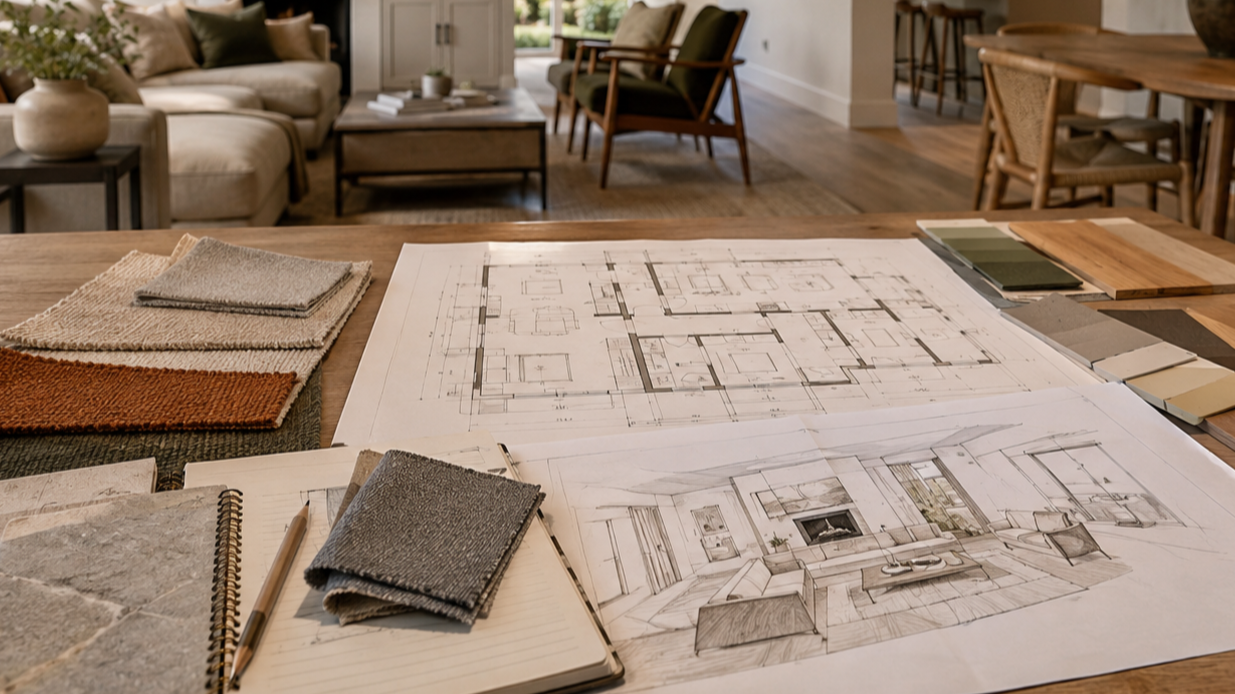
Not everyone needs an interior designer.
If the room already works and the plan is simply to repaint, change a few accessories or replace one piece of furniture, paying for a full interior design service probably wouldn’t make much sense.
The question changes when several expensive decisions start happening at the same time.
A renovation might involve the furniture layout, kitchen, lighting, sockets, storage, flooring, joinery and furniture all needing to work together. That is usually where I think professional input starts to become much more valuable.
Not because someone needs a designer to choose nice things for them. It is because mistakes become harder and more expensive to change once work has started.
Where the value of a designer starts to show
This is often where the value of a designer becomes clearer. It is not really at the stage of choosing cushions, colours or decorative finishes. It is earlier, when several decisions start affecting each other.
A sofa position can change where the TV works best. That can affect the media wall, sockets and lighting. The kitchen layout can look beautiful on its own, but once the dining table and furniture are added, the circulation may suddenly feel tight.
None of these things is a huge problem by itself. The difficulty comes when each decision has been made separately and only later does someone realise they all have to work together in the same room.
This is the part of interior design I think people sometimes don’t see from the outside. A lot of the value is in looking at the whole space early enough to notice where one decision might create another problem later.
A beautiful home still matters, of course. But for me, it has to work properly first.
What are you actually paying a designer for?
I think this is the part that is often misunderstood. Hiring an interior designer is not really about paying someone to choose cushions, colours or furniture.
A lot of the value is in the thinking that happens before those choices are made.
It is looking at the layout and noticing that the sofa will make the walkway too tight. It is seeing that the dining table will feel squeezed once the chairs are pulled out. It is thinking about the TV, lighting, sockets and storage before any of them become fixed decisions.
It is also having someone help narrow things down. Renovations can involve hundreds of choices, and not every option deserves the same amount of time or money. Part of the job is knowing which decisions matter most and which ones can stay simple.
Sometimes the value is avoiding a costly change later. Sometimes it is making the process less overwhelming. And sometimes it is simply having someone look at the whole room and notice something that is difficult to see when you have been thinking about the project for months.
Why layout should come before shopping
One situation I see quite often is an open-plan room that looks generous on paper, but nobody is completely sure how it should actually work.
The sofa, TV, dining table, storage and lighting all need to share the same space. If those decisions are made separately, the room can start to feel awkward very quickly. The sofa might interrupt the walkway, the dining table may feel squeezed, or the only good wall for storage ends up being used for the TV.
This is why I normally start with the layout before thinking too much about furniture or finishes. I look at how people will move through the room, where the main furniture wants to sit, what needs storing and where the natural focal point should be.
Once that part is clear, the rest becomes much easier. Furniture choices make more sense, lighting positions have a reason, and money is less likely to be spent on pieces that later feel wrong for the space.
Sometimes the biggest help is narrowing the decisions
One part of a renovation people don’t always expect is how tiring the decisions can become. At first, choosing flooring, lighting or furniture can feel exciting. A few weeks later, even quite small choices can start to feel exhausting because everything seems connected.
Change the sofa and the rug size may change. Move the furniture and the lighting might need looking at again. Add joinery and suddenly the wall space works differently.
This is one of the quieter ways a designer can help. The job isn’t to give someone hundreds more options. It is often the opposite: narrow things down, work out which decisions need making first and keep the overall direction clear.
That doesn’t mean pushing someone towards one particular style. It means making the choices feel more manageable and helping each decision work with the rest of the home.
When hiring an interior designer is probably worth it
I think professional design help becomes much more worthwhile when several expensive decisions are happening at the same time.
A renovation or extension is a good example. The layout, kitchen, lighting, sockets, storage, joinery and furniture may all affect each other, and changing one decision can easily create another problem somewhere else.
It can also be useful when the space simply isn’t making sense. Perhaps the furniture layout feels awkward, there is no obvious place for the TV, storage is difficult, or there are so many options that it is becoming hard to know what to decide first.
That is usually where having someone look at the whole picture can make a difference. Not because every decision needs to be complicated, but because the important ones can be resolved before money is committed.
For me, that is where much of the value sits: in the thinking behind the finished room, not only in how it eventually looks.
When hiring a designer probably isn’t necessary
Not every project needs an interior designer, and I think it is important to say that.
If the room already works, the layout is clear, and the changes are mostly cosmetic, professional design help may not add enough value to justify the cost.
The same can be true when someone already feels confident making the decisions themselves. If the furniture fits, the lighting works, the storage is sorted, and the plan is mainly about updating colours, finishes or a few individual pieces, a full design service may simply be more than is needed.
Sometimes a smaller amount of help makes more sense. One focused consultation can be enough to check a layout, talk through lighting, review furniture options or give a second opinion before money is spent.
For me, the right level of support matters just as much as the design itself. Not every project needs a full service, but the more complex the decisions become, the more useful professional input can be.
So, is hiring an interior designer worth it?
For the right project, I think it can be. But not because a designer simply chooses nicer furniture or finishes.
The value becomes much clearer when there are several decisions affecting each other, the layout still feels unresolved, or money is about to be committed to things that will be difficult to change later.
For a smaller or more straightforward room, full interior design may not be necessary at all. Sometimes one experienced pair of eyes is enough to spot what isn’t working or help make a decision feel clearer.
That is why I offer a 90-minute Design Consultation as well as larger design services. It is for homeowners who have a particular room, layout or renovation question and want professional advice without committing to a full design project.
If you are wondering what happens during a consultation, I have also written about what to expect from an interior design consultation.
Frequently Asked Questions
Is hiring an interior designer worth it for a renovation?
It can be, especially when several expensive decisions need to work together. Layout, lighting, sockets, storage, furniture and finishes can all affect one another, so professional input can be useful before those decisions become harder to change.
When should I hire an interior designer?
Usually, the earlier the better if the project involves a renovation, extension or major layout changes. I find it most useful when the main interior decisions are still flexible rather than after everything has already been fixed on site.
Can an interior designer help with furniture layout?
Yes. Space planning is a big part of interior design. It can help work out where furniture should sit, whether circulation feels comfortable, where the TV works best and what size pieces actually suit the room.
Do I need full interior design for one room?
Not always. If the issue is fairly focused, such as a difficult layout, lighting question or furniture decision, a consultation or space-planning service may be enough. Full interior design makes more sense when several parts of the room or project need to be developed together.
