
Should I Hire a Designer Before Buying Furniture?
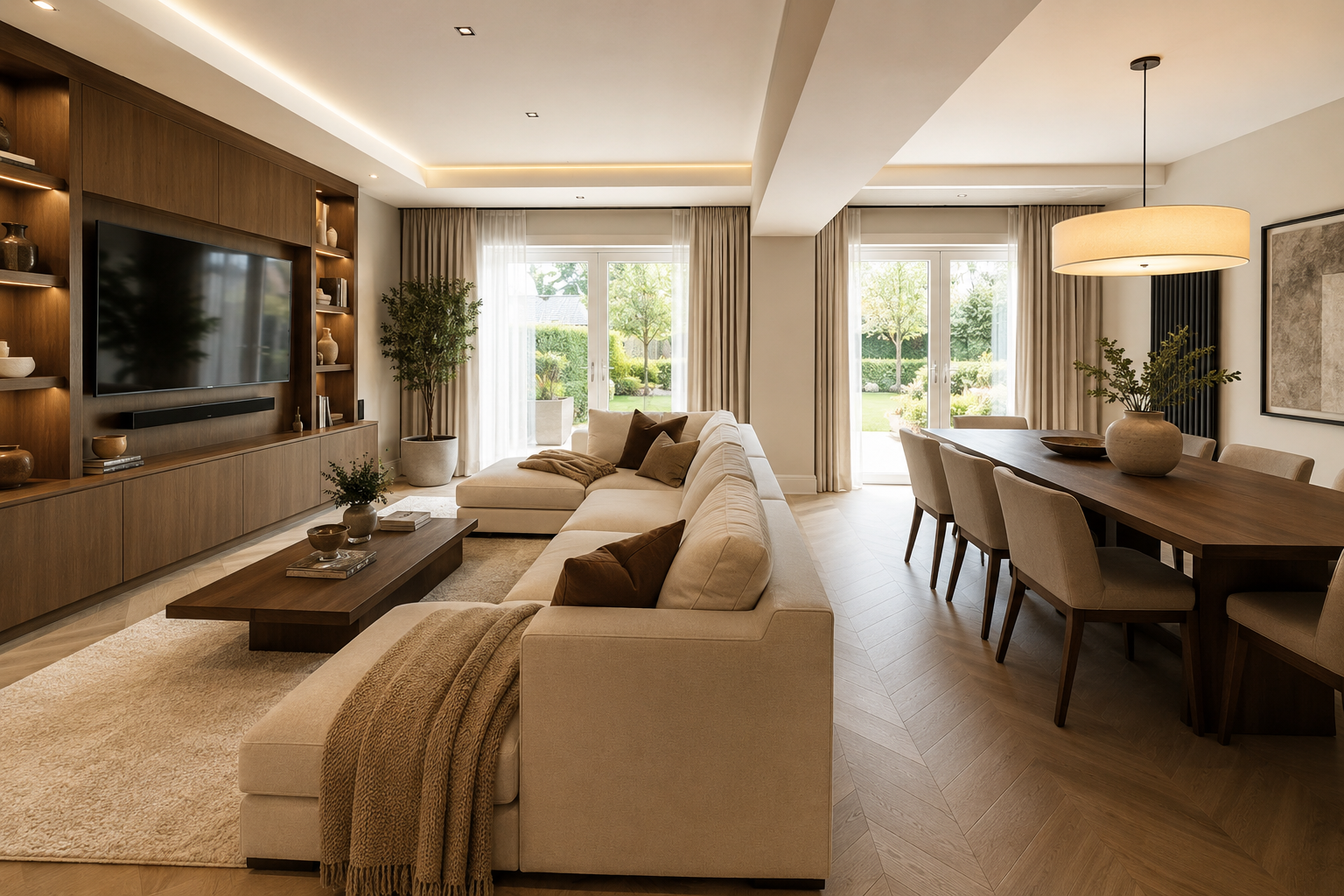
I see this quite often when people are furnishing a living room or an open-plan space. They start with the pieces they like: a sofa, dining table, armchairs, maybe a media unit. There is nothing wrong with any of the furniture individually, but once everything is in the room, it somehow doesn’t feel as good as they expected.
Sometimes the sofa is deeper than it looked online and suddenly the walkway feels tight. The dining table technically fits, but there isn’t really enough room to pull the chairs out comfortably. The TV ends up wherever there is a spare wall, and then the rest of the furniture has to work around it.
That doesn’t necessarily mean the wrong furniture was bought. Often the room simply wasn’t properly planned before the shopping started.
For me, that is the point where furniture buying and space planning start to overlap. I would rather understand how the whole room needs to work first, then look at what furniture actually makes sense for it.
The furniture is not always the real problem
A room can have a beautiful sofa, lovely furniture and expensive finishes and still feel awkward. Usually there is something underneath that needs resolving.
Open-plan rooms are a good example because one space may need to work as a living area, dining area and kitchen at the same time. The sofa cannot be looked at on its own because its position affects the TV, walkways, lighting and sometimes even where sockets are needed. The dining table might look perfectly fine on a floor plan until the chairs are pulled out and somebody needs to walk behind them.
This is why I normally start with the layout rather than asking which sofa someone likes.
I want to know where people naturally walk through the room, what furniture needs to stay, where the best TV position is, how much storage is actually needed and whether the room still feels comfortable once everything is in place. Once those things are clearer, shopping becomes much easier because there is a reason behind each piece being chosen.
It also becomes easier to rule things out. A sofa can be beautiful and still be wrong for that particular room. That is a much easier decision to make before it has been delivered.
The expensive pieces are where planning matters most
I don’t think someone needs an interior designer every time they buy a chair or side table. But I do think it becomes worth slowing down when the furniture is large, expensive or difficult to return.
A main sofa is a good example. So is a dining table for a tighter open-plan room, a large bed where wardrobe access is limited or bespoke furniture that has been made specifically for the space.
These pieces affect much more than their own footprint.
A sofa changes the amount of circulation around the living area and can affect where a coffee table, side tables and floor lamps will sit. The TV position may change with it. During a renovation, even the sockets and lighting can end up being affected by where that furniture eventually goes.
The same thing happens with dining furniture. Looking only at the size of the table is not enough. The chairs need to pull out, people need to sit comfortably and there still needs to be room to move around them.
That is why “will it fit?” is not really the question I use.
I am more interested in “will the room still work once it is there?”
There is quite a difference between the two.
Buying furniture during a renovation needs even more thought
If furniture is being chosen as part of a renovation or extension, I would usually want the main layout decided much earlier.
This does not mean choosing every fabric and accessory before the building work starts. It means knowing enough about the finished room to make sensible decisions about things that are being fixed now.
If the sofa is going to float away from the wall in an open-plan space, where will a floor lamp get power? If a media wall is planned, are the sockets and data points where they actually need to be? If the dining table is going under a pendant, is everybody confident about where that table will eventually sit?
These are small details when they are still on a drawing. They become much more annoying once everything has been installed.
This is also why I think space planning is useful before furniture shopping. The room is looked at as a whole rather than one purchase at a time.
When a designer probably isn’t needed
Not every furniture decision needs professional help.
If the existing layout already works and somebody is simply replacing a side table, occasional chair or an old sofa with something very similar in size, bringing in a designer may be unnecessary.
The same applies if the room is straightforward and the homeowner already feels confident about the measurements, furniture scale and overall direction.
Sometimes buying the furniture really can be that simple.
I think the point where design help becomes more useful is when there is uncertainty. Perhaps two layouts both seem possible, the furniture is expensive, the room has several different functions, or one purchase is going to affect lots of other decisions.
If the bigger question is whether professional design help is worth paying for at all, I’ve also written about when hiring an interior designer is worth it and when it probably isn’t.
That is very different from asking someone to choose a lamp.
What if the furniture has already been bought?
That doesn’t automatically mean everything needs replacing.
Sometimes the individual furniture is perfectly usable, and it is the arrangement that is causing the problem. Moving the sofa, changing the rug size or repositioning a chair can make a surprising difference to how the room feels.
I would normally look at what is already there first.
One thing I would avoid is trying to fix an awkward room by continually adding more furniture and accessories. When something feels unfinished, it is tempting to keep buying things in the hope that the next piece will pull everything together.
If the underlying problem is the layout, more things can actually make it worse.
That is when I would come back to the same question: what is really not working here?
Sometimes one conversation is enough
Full interior design is not always necessary just because somebody wants help choosing furniture.
There are plenty of situations where the room is nearly there and what is really needed is a professional second opinion before a large purchase is made. That might be checking whether a sofa size works, looking at two possible layouts or working out how the dining and living areas can sit together without making the room feel crowded.
That is the sort of thing we can look at during my 90-minute Design Consultation.
If the room is more complicated and several layouts need to be properly working through, then a Space Planning service may make more sense.
The aim is not to turn buying furniture into a complicated design exercise. It is to get the important decisions clear enough that shopping becomes easier.
So, should a designer come before the furniture?
Not for every purchase.
But if the piece is expensive, the layout still feels uncertain, or several things in the room need to work together, I think it is worth understanding the room before committing to the furniture.
It is much nicer when the sofa arrives and simply feels right than spending the next few years trying to work around it.
