
Can an Interior Designer Save Money on a Renovation?
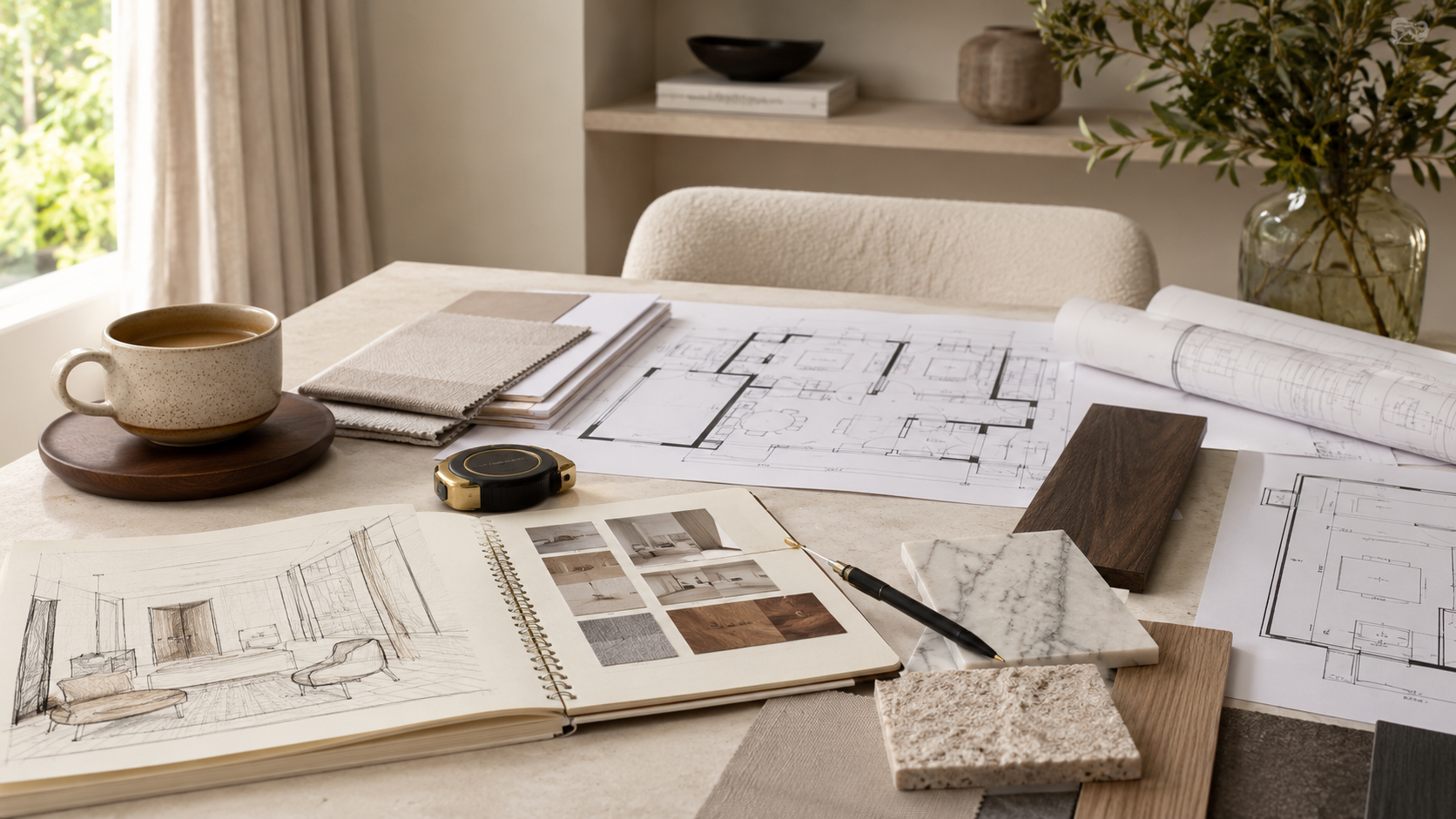
Renovations are expensive, so it is completely reasonable to wonder whether paying an interior designer is just another cost to add to an already growing budget.
I don’t think the answer is as simple as saying, “yes, a designer will save you money.” Sometimes they might. Sometimes the design fee will simply be another investment in the project.
For me, the real value is usually somewhere else.
It is having enough of the home worked out before expensive decisions start becoming permanent. A sofa that turns out to be wrong can sometimes be returned. Moving sockets after the walls have been finished, changing a kitchen layout once it has been ordered or rebuilding joinery because the proportions don’t work is a very different situation.
So when I think about saving money during a renovation, I am less interested in finding the cheapest option. I am more interested in avoiding paying twice.
A lot of renovation overspending starts with decisions being made in the wrong order
This is something I notice quite often.
The kitchen is being designed before the dining area has really been planned. The electrician needs socket positions, but nobody is completely sure where the sofa or TV will eventually sit. Flooring is being ordered while changes to the layout are still being discussed.
None of those decisions looks particularly dangerous on its own. The difficulty is that they all affect each other.
Imagine an open-plan kitchen, dining and living space. The island is made slightly larger because there seems to be room. Later, once the dining table and chairs are properly considered, the walkway feels much tighter than expected. Moving the dining table then affects the pendant position. The sofa has to move slightly, which changes the relationship with the TV wall.
One early decision has quietly moved several others.
That is why I like to understand the finished room before too much is fixed on site. It doesn’t mean every cushion and accessory needs choosing before building work starts. It means the important decisions have enough direction that one part of the project isn’t working against another.
Sometimes the saving is simply not buying the wrong thing
Furniture is probably the easiest example because most of us know what it feels like to buy something and realise afterwards that it isn’t quite right.
During a renovation, though, the mistakes can become much more expensive than ordering the wrong chair.
A kitchen island can technically fit but leave uncomfortable circulation around it. A large media wall can look impressive on an elevation but overwhelm the finished room once the sofa and other furniture are added. Bespoke storage can be beautifully made and still fail to store the things the household actually needs.
Even lighting can become expensive to change if the room was not properly planned beforehand. A pendant may be centred beautifully on the ceiling and then look completely wrong when the dining table eventually sits somewhere else.
These are not really decorating mistakes. They are planning mistakes.
And that is where I think an interior designer can sometimes protect the budget: by helping work through the relationships between the different decisions before money has already been committed.
Spending less and spending better are not always the same thing
I don’t think a successful renovation is necessarily the one that costs the least.
Sometimes the cheapest option becomes expensive because it gets replaced. Sometimes spending more in one area allows something else to stay simple.
This is where priorities matter.
If the budget is limited, I would rather understand what will make the biggest difference to everyday life than spread the money evenly across everything just because it feels fair.
In one home, that might be getting the layout right before anything decorative is considered. In another, good storage may make a bigger difference than expensive finishes. Someone else may already have a layout that works perfectly and would rather invest in the lighting or a piece of joinery they will use every day.
A designer is not there to make every decision more expensive. Part of the job is knowing where something is worth the investment and where a simpler solution will do the job perfectly well.
That can be particularly useful when renovation fatigue starts setting in. After months of choices, it becomes very easy to approve something simply because everyone needs an answer. Those rushed decisions are not always the ones somebody would have made if the project had been clearer earlier.
The layout is usually where I would look first
Before spending much time on finishes, I want to know whether the space itself works.
Where will the main furniture sit? Can people move around it comfortably? Does the dining table still work once the chairs are pulled out? Where does the TV make most sense? What needs storing, and where should that storage actually go?
Those questions might sound simple, but they affect a surprising number of decisions later.
Once the space planning is clear, the kitchen can be looked at in relation to the dining area rather than in isolation. Lighting positions have something to respond to. Sockets can be placed where people will actually use them. Furniture sizes become easier to judge.
This is also why I think the furniture plan needs to exist before first fix becomes too advanced. I recently wrote about this in more detail in Before First Fix, Has Anyone Actually Planned the Finished Room?
The earlier those relationships are understood, the easier it is to make the rest of the renovation work around them rather than trying to correct things later.
Does this mean everyone renovating needs an interior designer?
No.
If the renovation is straightforward, the layout already works and the homeowner feels confident making the remaining decisions, paying for full interior design may not make financial sense.
Some people genuinely enjoy researching products, comparing layouts and working through all the details themselves. If that sounds enjoyable rather than stressful, professional design support may simply be unnecessary.
I think the value becomes clearer when the project starts involving several connected decisions, when the layout is still unresolved or when mistakes would be difficult to reverse.
That does not automatically mean a full interior design service either.
Sometimes one focused consultation is enough to answer the questions that are holding everything else up. Other projects need more detailed space planning. And when architectural drawings are already prepared but the interior decisions before first fix still feel unclear, that is the stage I look at through my Build-Ready Renovation Audit.
The right amount of help matters just as much as getting help in the first place.
So, can an interior designer actually save money on a renovation?
Sometimes.
But I wouldn’t hire a designer because somebody has promised the design fee will magically come back in savings.
I would look at the bigger question: how much money is about to be committed to decisions that are still uncertain?
If a renovation involves a kitchen, furniture, lighting, sockets, storage, joinery and finishes, the total spend can become significant very quickly. Having those decisions considered together can reduce the chance of money being spent on something that later has to be changed, adapted or replaced.
Sometimes that results in a direct saving.
Sometimes the value is avoiding a frustrating mistake.
And sometimes it simply means reaching the end of the renovation knowing the money went into the parts of the home that actually mattered.
For me, that is a much more useful way to think about it than trying to make every individual item cheaper.
Planning a renovation and worried some decisions may still be unresolved?
If the architectural drawings are ready but the layout, furniture, kitchen, lighting, sockets or joinery still need checking before building work moves forward, my Build-Ready Renovation Audit is designed for that stage.
I review the plans from the point of view of the finished home and highlight the decisions that may need attention while they are still easier to change.
Frequently Asked Questions
Can an interior designer guarantee that I will save money?
No. The value depends on the project, the decisions involved and the level of design support. A designer may help avoid unsuitable purchases, rework or changes later, but the design fee itself also needs to be considered as part of the project budget.
When should an interior designer become involved in a renovation?
Ideally while the important interior decisions are still flexible. Layout, furniture, kitchen planning, lighting, sockets and joinery can all affect each other, so it is useful to consider them before those decisions become fixed on site.
Do I need full interior design to get help with renovation planning?
Not always. A focused Design Consultation may be enough for a specific problem, while Space Planning can help when the main issue is layout. Larger or more connected projects may need more detailed design support.
Can an interior designer work alongside my builder or kitchen designer?
Yes. They have different roles. The builder focuses on delivering the construction work, and a kitchen designer focuses primarily on the kitchen. An interior designer looks more broadly at how the finished rooms, furniture, lighting, storage and other interior decisions work together.
